


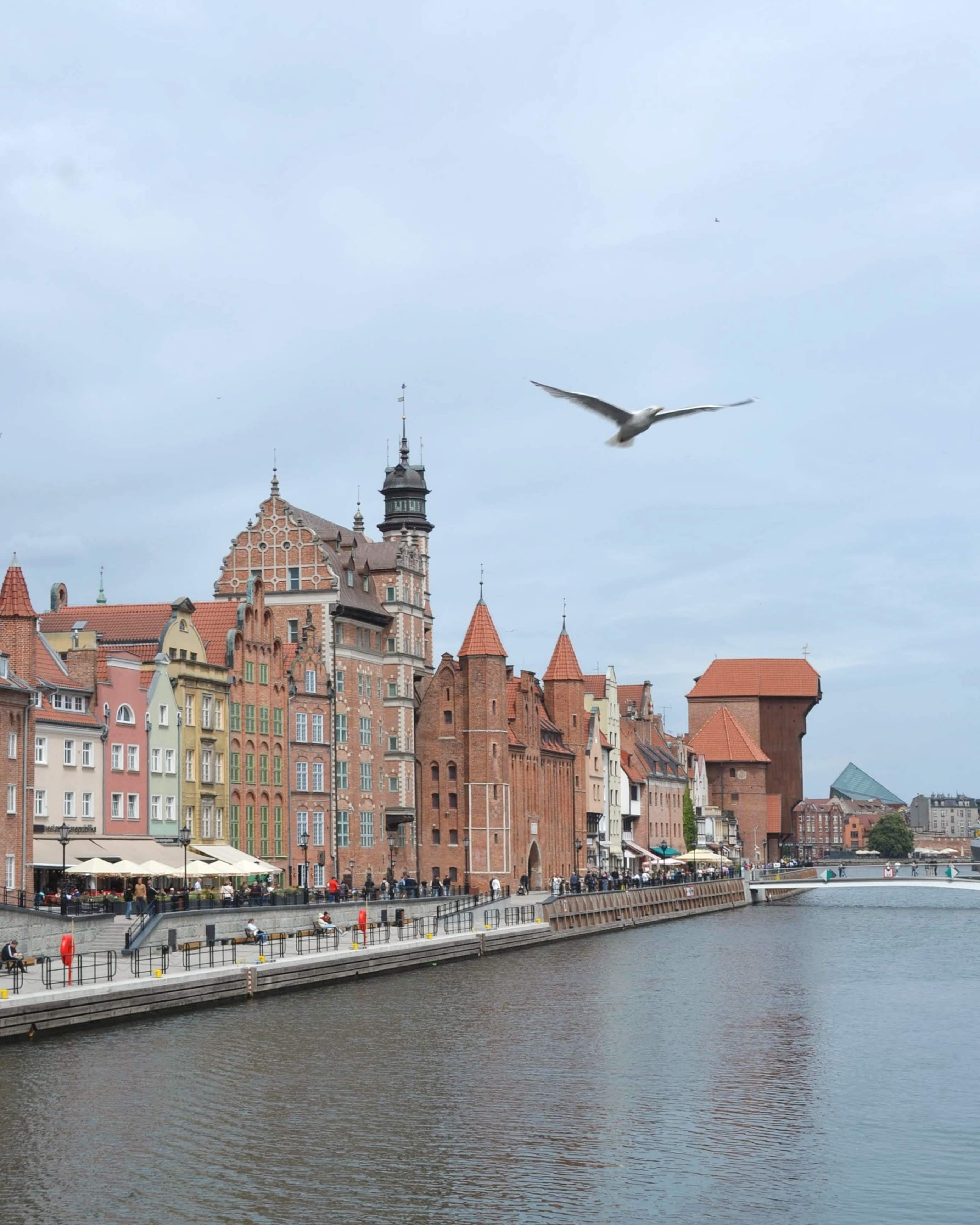
Friends, hello! Happy Sunday! I hope this post finds you happy, healthy, and somewhat well-rested after enjoying your weekend. I’m dropping into your inbox this morning to share my latest travel guide with you: 7 Things to See in Gdańsk, Poland! In case you missed it, Husband and I visited Gdańsk back at the end of May as our babymoon trip, and it was so lovely! We spent five days exploring the gorgeous port city — three of them alone & two of them with my sister, who joined us for a final hoorah — and I’ve been itching to share this guide with you ever since! If you’re thinking this sounds like a post without any foodie recommendations, you are correct. However, don’t panic! We dined and sipped at so many lovely spots during our visit that I have a whole separate food & drink guide to the city coming atcha in the next few weeks. Now, shall we?
Also yes, that seagull is a paid actor.
Everything we learned and loved about Gdańsk is detailed below, divided into the following sections for ease: before you visit + fun facts / getting there / where we stayed / 7 things to see. It’s a short-yet-sweet guide to everything we got up to during our time in town, and I really hope you like it.
Enjoy!

before you visit + fun facts
Just some useful informational bits & bobs to know if you’re Gdańsk-bound in the near future:
Poland does not use the euro! The currency is the Polish Złoty, written as PLN or zł. At the time of our visit, €1 was around 4.20PLN.
WWII started here! The very first shots of the war were fired in a historic battle at Westerplatte, a military depot in the port of the city. While we didn’t make the journey to the Westerplatte site during our time in town, we did visit a lesser known but just as important spot; more on that below!
Gdańsk is the amber capital of the world! The Baltic Sea, just off the coast of the city, has some of the largest amber deposits in the world, so if you’ve ever been tempted to buy yourself a pretty piece of jewelry, this would be the spot!
between the years 1920 - 1939, Gdańsk — together with 200 surrounding cities/towns — was actually an independent city-state known as the ‘Free City of Danzig’! The territory was self-governing, had its own constitution, currency, passports, parliament, everything! The Free City was dissolved by the Germans when they took control of the area at the beginning of WWII, but it’s pretty cool to imagine. If you’re interested in other city-states: 6 Things to See in Monaco.
Not to worry, there’s a few more location-specific fun facts littered throughout the rest of the post 😉

getting there
Here’s how we made the journey to Gdańsk for our babymoon:
we flew with Ryanair from Dublin airport to Gdańsk Lech Wałęsa Airport. I was expecting it to be longer, but the flight only took 2-hours all in!
there was a bizarrely long queue at passport control when we entered the airport terminal, and I genuinely feel we would’ve been there for hours if we hadn’t discovered the hidden self-scanner queue? If this happens to you: on the far most left of the room, there’s a secondary queue to use the self-scanner passport machines! We still had a bit of a wait, but nothing too bad! Would recommend.
once we got through passport control, we followed the blue line on the ground directing us to the bus stops. The blue line led all the way outside the building and across the road to a little bus terminal, where we waited at Platform 1 for the number 210 bus into the city centre.
there was a ticket machine at the platform, but there was a queue of people using it, so we just bought our tickets on the bus when we got on. However! The machine on board was very confusing and it was stressful (for Husband) trying to buy tickets while on a jerky moving bus, so we’d definitely recommend buying your ticket before boarding the bus if possible. A single ticket into the city centre cost 4.80PLN each, which was around €1.10 each.
we got off the bus at the very last stop, Gdańsk Główny, which took about 45-minutes to reach. From there, we walked into town to drop off our bags at the hotel, which took about 20-minutes. *Actually, we stopped for lunch at Pierogarnia Mandu first, followed by donuts at Dobra Pączkarnia, both of which I’d HIGHLY recommend you stop at also!*
on our return to the airport a few days later, we decided to be lazy and take a taxi. Our hotel organized the taxi for us; it picked us up right on time, and had us at the airport a speedy 20-minutes later. The journey for three people + luggage cost 95PLN/€22.
pro tip: if you’re looking for more information about the different ways to get to/from Gdańsk airport, this website is fantastic! Proper detailed directions for bus, train, and taxi options - with photos! Would recommend!

where we stayed


The Cloud One Hotel Gdańsk // such a fantastic find! A quirky boutique style hotel within walking distance to everything the city has to offer. We opted for a Standard King Room - we were on babymoon after all 😉 - and it was perfect; large and spacious, lots of natural light, windows overlooking the surrounding streets, a desk & seating area, great soundproofing, huge comfy bed, super clean, and a nice bathroom with a solid shower. Honestly, it was perfect! The hotel itself was also gorgeously decorated, with a cool bar space + menu! Would recommend. Address: Stągiewna 27, 80-750 Gdańsk

7 things to see in gdańsk

długi targ & neptune’s fountain


— ADDRESS: Długa, 80-831 Gdańsk
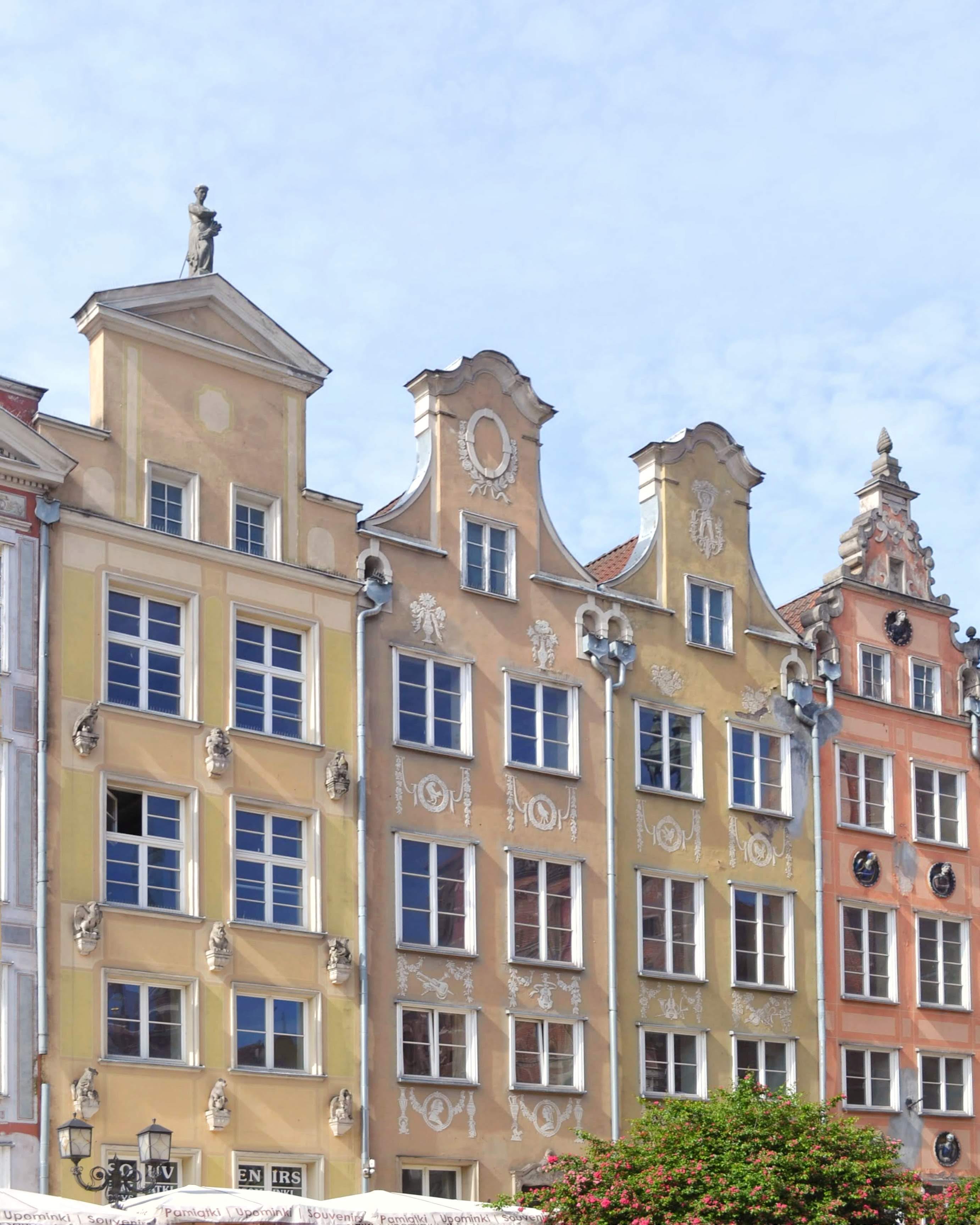
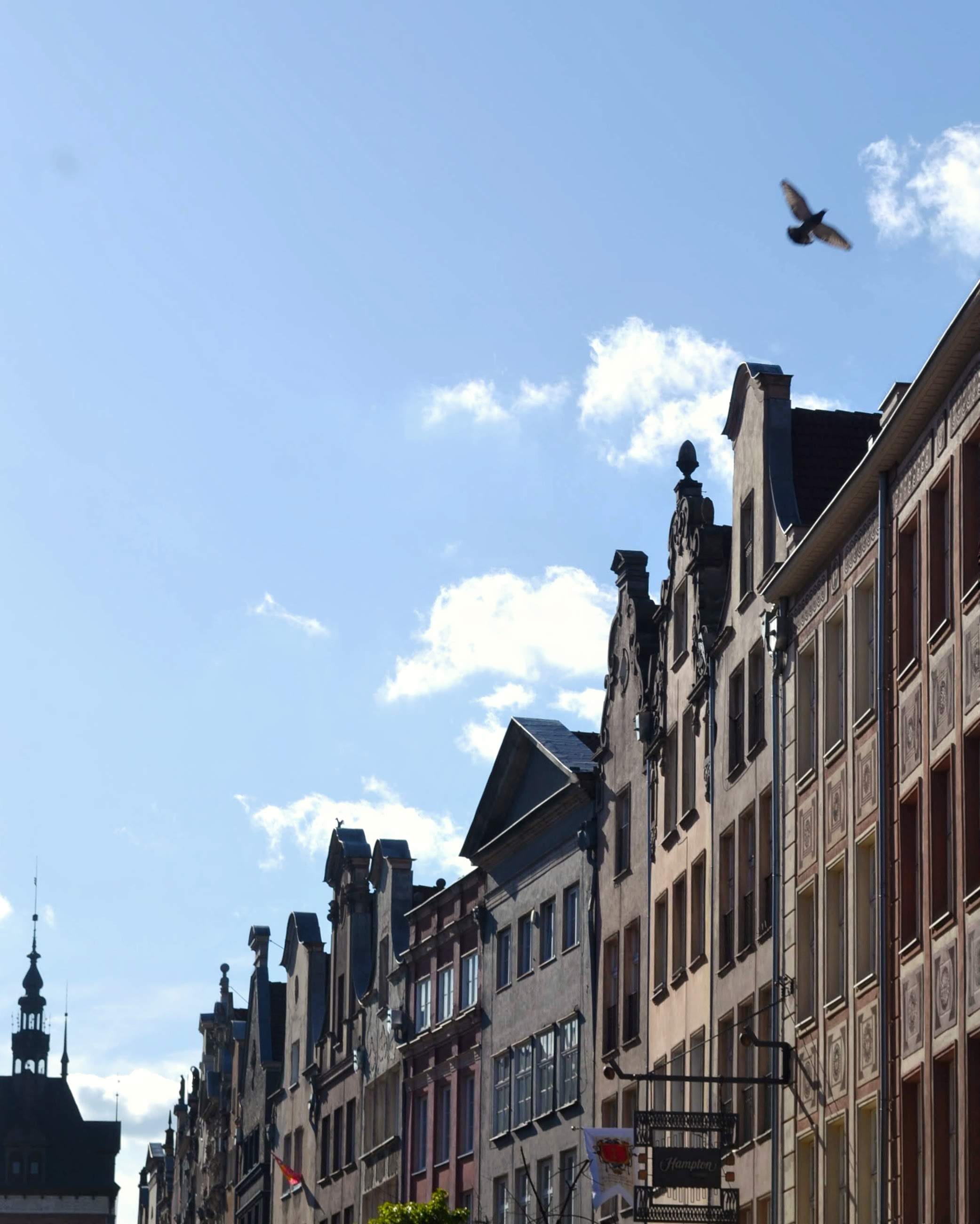
Długi Targ (Long Market Street) is the most famous street in Gdańsk. Located smack bang in the centre of the town, this long and picturesque street was once the market hub of the city, lined with guilds, stores, and homes to some of the city’s wealthiest dwellers. While the market no longer lines the route down Długi Targ — now mostly filled with knick-knack shops, convenience stores, and restaurants — it still makes for a lovely walking place, framed on both sides by colourful buildings with pretty rooftops. About halfway down Długi Targ stands Neptune’s Fountain, where a large statue of the Roman sea god looks down upon passersby.

st mary’s basilica


— INFO: website
— ADDRESS: Podkramarska 5, 80-834 Gdańsk
— ENTRANCE COST: free to enter the basilica, 20PLN/€4.70 to climb the tower
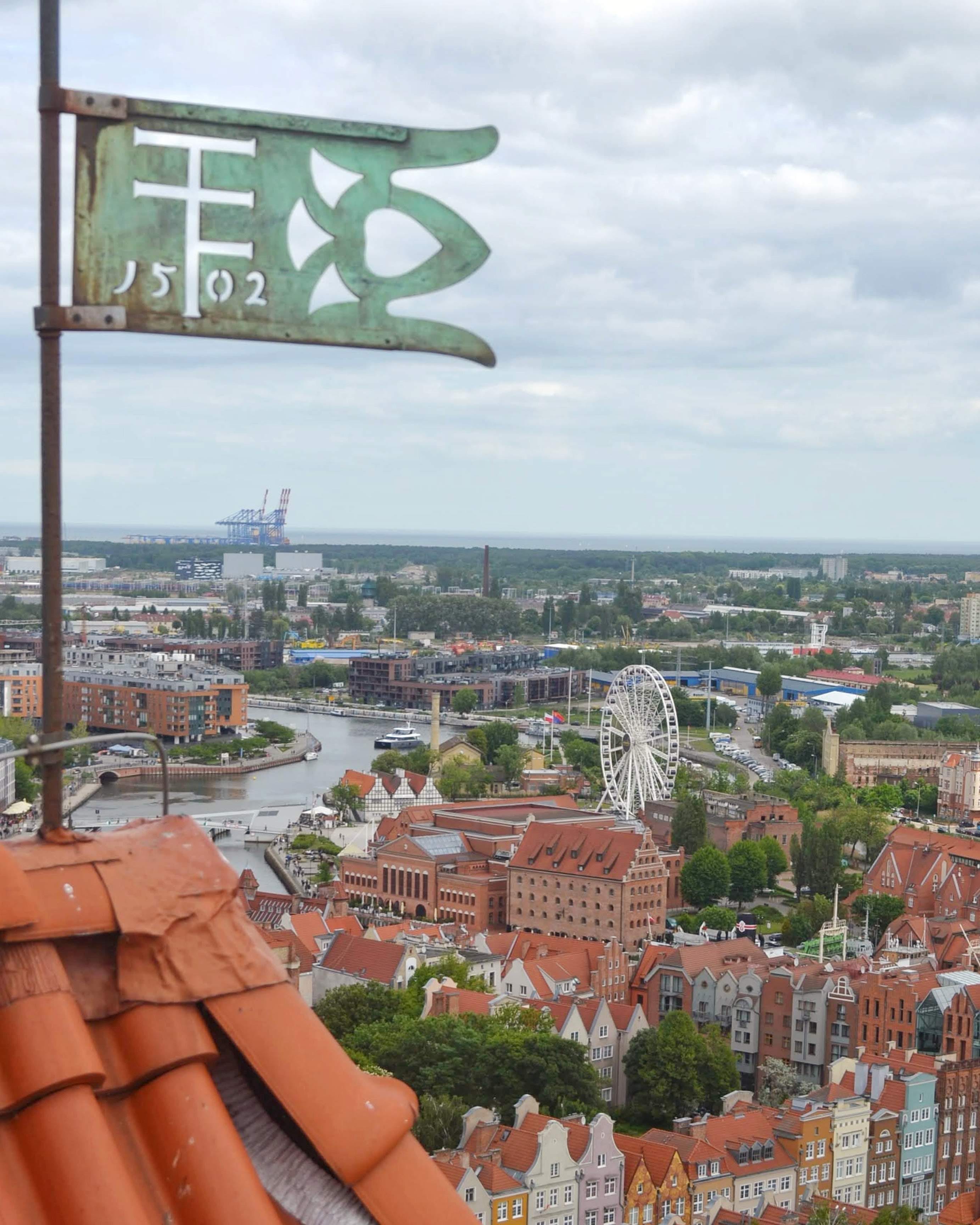
St. Mary's Basilica is said to have one of the very best viewpoints in all of Gdańsk, and I sure as heck wasn’t going to let my fear of heights stop Husband from enjoying it — so we waited until my sister got into town and made her go up with him! While they sweated their butts all the way to the top of the tower’s 405 steps, myself and Baby Bean took in the ground level sights: the astronomical clock, some chapels, many tombstones, and a rather impressive stained glass window. When the other two eventually rejoined me at ground level — covered in a sheen of perspiration, I might add — they both agreed the view was worth the effort of climbing up all those steps in the 25°C weather!
Fun fact: St. Mary's Basilica is the tallest brick church in the world! It stands proudly at a whopping 78-metres/255-feet!

mariacka street

— ADDRESS: Mariacka, 80-833 Gdańsk
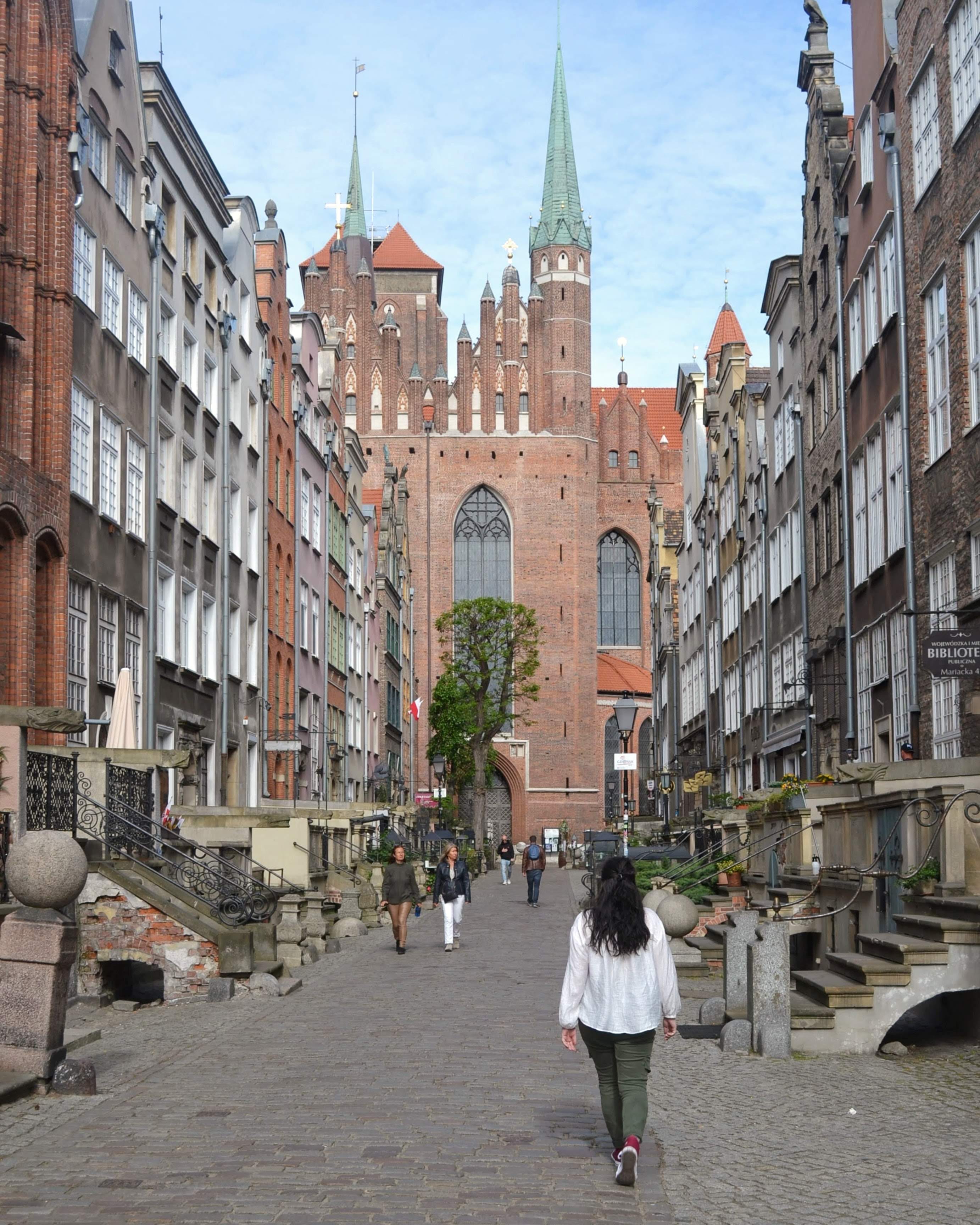
This gorgeous little street, bookended on one side by a beautiful peaked archway and on the other by St Mary’s Basilica, was our favourite spot for a stroll in the city! Lined with some of the very best amber shops in the city, cozy cafes aplenty, fancy-looking restaurants, and many an inviting stoop, it had such a romantic air about it.
Pro tip: if you’re looking for the peak romantic strolling hours, we found it to be especially gorgeous in both the very early morning and dusk/early evening. Magical ✨

museum of the second world war


— INFO: website
— ADDRESS: Plac Władysława Bartoszewskiego 1, 80-862 Gdańsk
— ENTRANCE COST: 32PLN/€7.50
Apart from the odd art gallery, Husband and I wouldn’t typically be big museum-goers when we’re exploring a new city. However, every guide / blog / recommendation said the same thing: if you’re visiting Gdańsk, you simply must visit this museum. And wow, I’m so glad we listened! We spent just shy of 3-hours wandering through the different exhibitions and reconstructions, and it was truly so fascinating. Heartbreaking and impossible to digest at points, but incredibly informative, well-structured, and displayed in such a way that actually kept my attention the whole time we were there. Particular highlights for us included the full-scale street reconstructions, the WWII fighter planes, and the documents and stories of the pre-war ‘Free City of Danzig’.
Pro tip: plan for at least 3-hours here, but ideally more if you can! We were under time pressure to go meet my sister, but easily could have spent another hour or more exploring the different rooms.

basilica of st. bridget


— INFO: website
— ADDRESS: Profesorska 17, 80-001 Gdańsk
— ENTRANCE COST: 6PLN/€1.40
I feel like this spot is such a hidden gem in Gdańsk. The main draw here is the altar, which is made entirely of amber(!), but there is also a blink-and-you’ll-miss-it crypt under the back of the church that contains hundreds of bones and a large wall of skulls! The crypt — which, btdubz, is very creepy — was only discovered during renovation works in 2010, so it is still a relatively new spot to visit in the city.
Fun fact: the altar here is the largest amber object in the whole world! The entire design consists of a whopping 6,500kg worth of amber and reaches heights of 174cm! The magnificence of the piece doesn’t really come through in the photos, but it was a very dazzling sight to see in real life, luminous and entrancing.

museum of the polish post office


— INFO: website
— ADDRESS: Plac Obrońców Poczty Polskiej 1/2, 80-800 Gdańsk
— ENTRANCE COST: we didn’t go in, but tickets cost 15PLN/€3.50.
**PLEASE NOTE: the museum is temporarily closed for refurbishments, with an expected reopening date sometime in September 2026!**
One of the spots where World War II broke out on 1st September 1939! Seen as a key communication hub and major symbol of Polish sovereignty, the attack here occurred at the same time as the attack on Westerplatte, where a much larger battle ensued. The museum was closed during our visit for renovations, but we mostly made the journey to this historic spot to see the statue outside the building, the Monument to the Defenders of the Polish Post Office. The monument depicts Nike, the Greek goddess of victory, being handed a rifle from a wounded Polish postal worker, symbolizing the defense of the post office.
Fun fact: the heroic workers inside the post office on that fateful day back in ‘39, who had been warned and prepped for an eventual attack, defended the building and were able to hold off the German SS troops for a whole 15-hours!

waterfront views along the river motława


— ADDRESS: Zielony Most, Stara Motława, Gdańsk
Okay let’s be real: Gdańsk is a ridiculously beautiful city — and nowhere in town highlights this beauty as effortlessly as a walk along Motława River. Our hotel was located on Wyspa Spichrzów (Granary Island), just a stone’s throw from the main thoroughfare/old town, so we got to admire the views from the Green Bridge every single time we went anywhere. It was gorgeous!

bonus: day-trip to sopot!
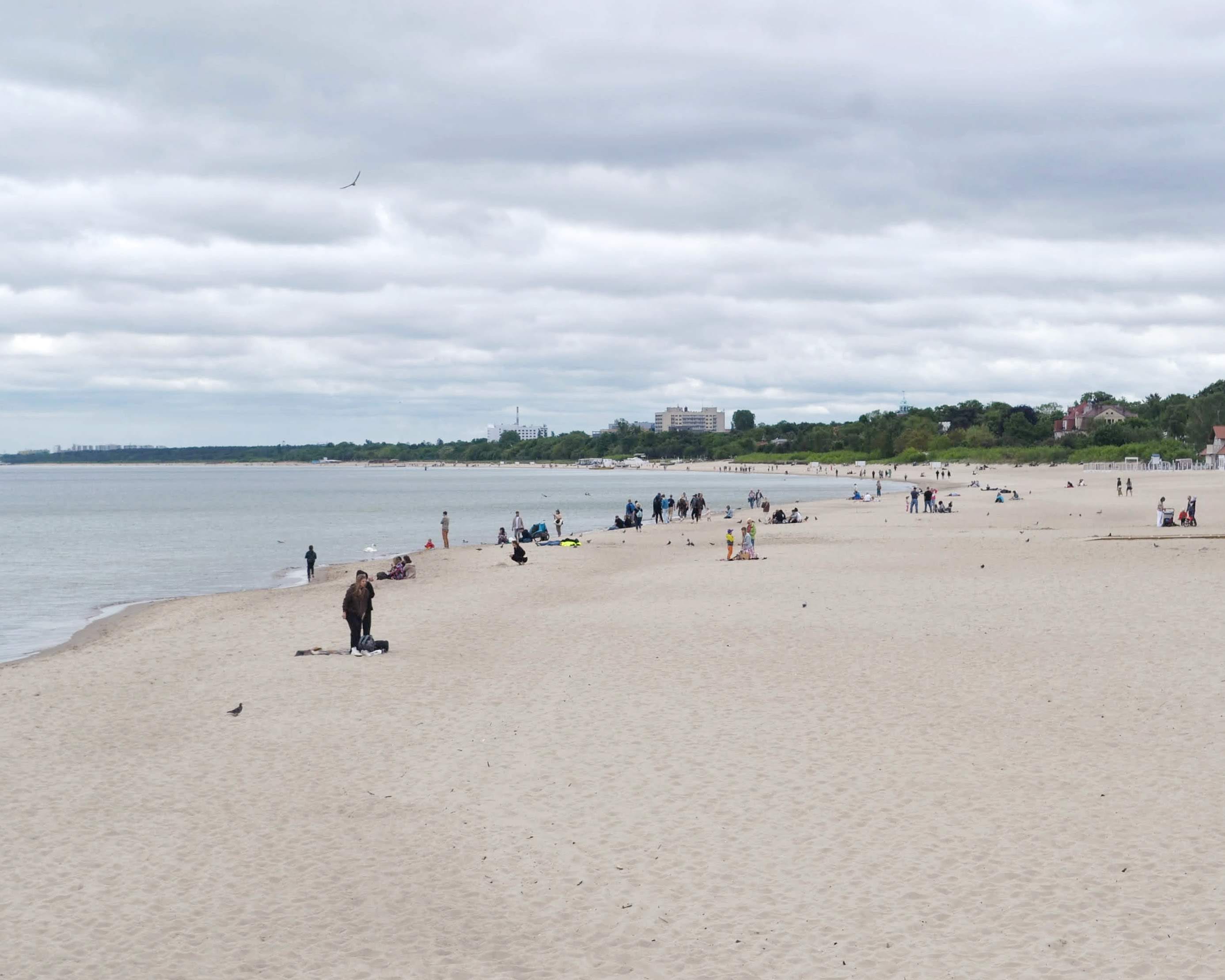


— GETTING THERE: take the train from Gdańsk Główny to Sopot; it takes 20-minutes one way, the trains depart every 10-minutes, and return tickets cost 13PLN/€3 each. We bought our tickets from a nice lady at the counter in Gdańsk Główny. Pro tip: don’t forget to validate your ticket on the platform before boarding!
— TOP 3 MUST-VISITS: Molo w Sopocie (Sopot Pier), 10PLN/€2.35 to visit // Krzywy Domek (Sopot’s Crooked House) // a stroll along Bohaterów Monte Cassino, the main street in town
Taking the train to Sopot for a couple of hours is such a lovely way to spend a day if you have a little extra time during your visit to Gdańsk! Together with Gdańsk and Gdynia, Sopot is part of the Tri-City area lining the coastline of Gdańsk Bay. We arrived sometime mid-morning, stopped at Cukiernia Pawłowicz for donut fuel, wandered down Bohaterów Monte Cassino street — stopping to admire Krzywy Domek, the statue of the tightrope fisherman, and the Kostel sv. Jiřího (Church of St. George) — before making our way onto the Molo w Sopocie. After taking in the beach views and healthy air from the end of the pier, we ambled slowly back up through town, stopped for a drink in Pinokio 2.0, and hopped on a train back to Gdańsk.
Fun fact: the Molo w Sopocie is the longest wooden pier in Europe! It stretches a lengthy 511.5-metres into the sea. Also! The concentration of iodine in the air at the very end of the pier is twice as high as it is on land, so forking out that €2-ish for the stroll down there is actually good for your health! Fun!

And there we have it: 7 Things to See in Gdańsk, Poland! What did you think? Have you ever been to the amber capital of the world? If you think I’m missing any of the city’s big hitters then please let me know in the comments below — I love hearing from you!
Hugs,
Vicki xo
*Date of trip: 27th - 31st May, 2025*


related posts
30 Countries in 30 Years, Part II
A Food & Drink Guide to Gdańsk, Poland
A Stopover in Cologne, Germany
